Replaceable by Design: What New EU Battery Rules Mean for Remote Controls

Replaceable by Design: What New EU Battery Rules Mean for Remote Controls

Battery access is becoming more than a convenience. For products sold in Europe, it is increasingly a design, documentation, and lifecycle-planning requirement.

A battery door may be one of the smallest parts in a remote control, but it can determine whether the product remains useful for years or becomes waste when its original battery reaches the end of its life. That distinction is becoming more important as the European Union moves toward products that last longer, are easier to service, and allow batteries to be collected separately for recycling. For remote-control brands, the message is straightforward: battery access should be considered at the beginning of product development, not after the enclosure and electronics are already locked.

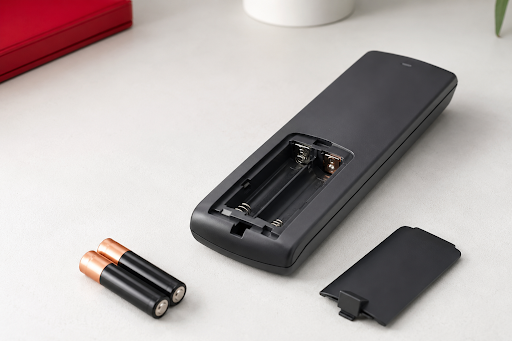
Figure 1. A familiar, serviceable battery compartment can support product longevity while making routine replacement easier for the user.

What the EU Rules Are Changing


Article 11 of the EU Batteries Regulation is scheduled to apply from February 18, 2027. In general, a product placed on the EU market with a portable battery must be designed so the battery can be readily removed and replaced by the end user during the product's lifetime. The rule is aimed at extending product life, reducing unnecessary electronic waste, and helping batteries reach the correct collection and recycling stream.


The regulation gives practical meaning to the word readily. A user may be able to use ordinary commercially available tools, but the design generally should not require proprietary tools, heat, or solvents. If a specialized tool is necessary, the regulation addresses when it must be supplied with the product. The product also needs to remain functional after the replacement, and instructions and safety information must support the process. In other words, a theoretically removable battery hidden behind an enclosure that is likely to crack, deform, or lose its seal is not the same as a genuinely serviceable design.


The July 2026 Update Does Not Create a Blanket Exception


On July 14, 2026, the European Commission announced that it had adopted a delegated act adding six product categories to the list of exceptions, subject to the EU's scrutiny and publication process. The Commission's battery-removability update discusses products such as certain wearables, fitness trackers, electric toys, and equipment used in explosive atmospheres. Existing exceptions also address products for which end-user removal could conflict with safety, performance, or medical requirements.


That announcement is important, but it should not be interpreted as a general exemption for remote controls or handheld control products. The correct analysis depends on the finished product, the battery type, the intended market, and the role of the company placing the product on the EU market. Product owners should confirm their obligations with qualified regulatory specialists. From an engineering perspective, however, waiting for a final compliance review before considering battery access creates avoidable cost and risk.


Why Product Teams Should Act Before the Tooling Is Cut


Remote-control programs move through industrial design, mechanical design, PCB development, prototyping, tooling, first-article samples, testing, and mass production. Decisions made early in that sequence are inexpensive to explore. The same decisions become harder once the mold is fabricated and the interior architecture is fixed. A late request for easier battery removal can affect the enclosure wall, latch geometry, contacts, PCB placement, water or dust resistance, screw bosses, packaging, instructions, and testing plan.


The goal is not simply to add a door. The product team should determine who will replace the battery, how often replacement is expected, what tools are acceptable, how the door will be retained, and how many service cycles the mechanism should withstand. The design should also discourage incorrect battery insertion, reduce the chance of damage to contacts, and provide enough labeling or instructions for the intended user. These are usability and reliability questions as much as regulatory ones.


Five Questions for a Replaceable-Battery Remote


1. Can the intended user open it safely?


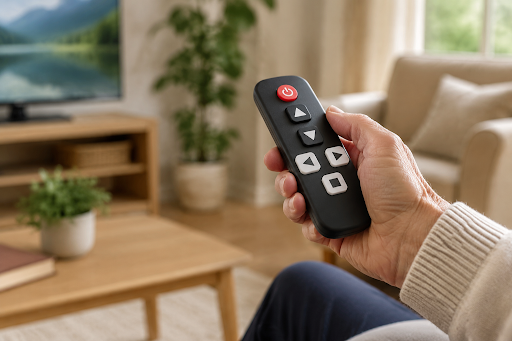
A latch that works for an engineer may still be too stiff, too small, or too ambiguous for the actual customer. Finger access, grip force, tool requirements, and clear opening direction should be evaluated with representative users.


2. Will the remote survive repeated battery changes?


The door, retaining tabs, screw features, and battery contacts need realistic lifecycle expectations. A mechanism that passes an initial sample review but weakens after several changes can shorten the life of the entire product.


3. Does replacement preserve performance?


Changing the battery should not erase essential programming, damage a seal, loosen the enclosure, or create unreliable electrical contact. Firmware behavior and non-volatile memory may be part of the serviceability plan.


4. Are safety requirements being considered across markets?


Coin cells, products used by children, medical applications, and wet or hazardous environments can introduce additional requirements. A globally distributed product may need a battery-access solution that balances EU replaceability rules with other market-specific safety obligations.


5. Do the instructions match the physical design?


Packaging, user instructions, battery markings, disposal guidance, and the product itself should tell the same story. Clear documentation cannot rescue a fragile design, but it can prevent predictable mistakes when the physical interaction is already sound.


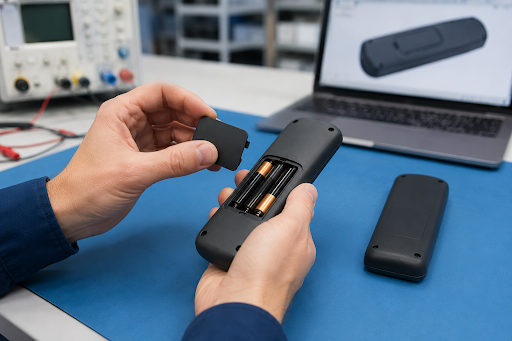
Figure 2. Battery-door geometry, grip, contact orientation, and repeated service cycles should be evaluated before tooling approval.

How Celadon Helps Solve the Replaceability Challenge


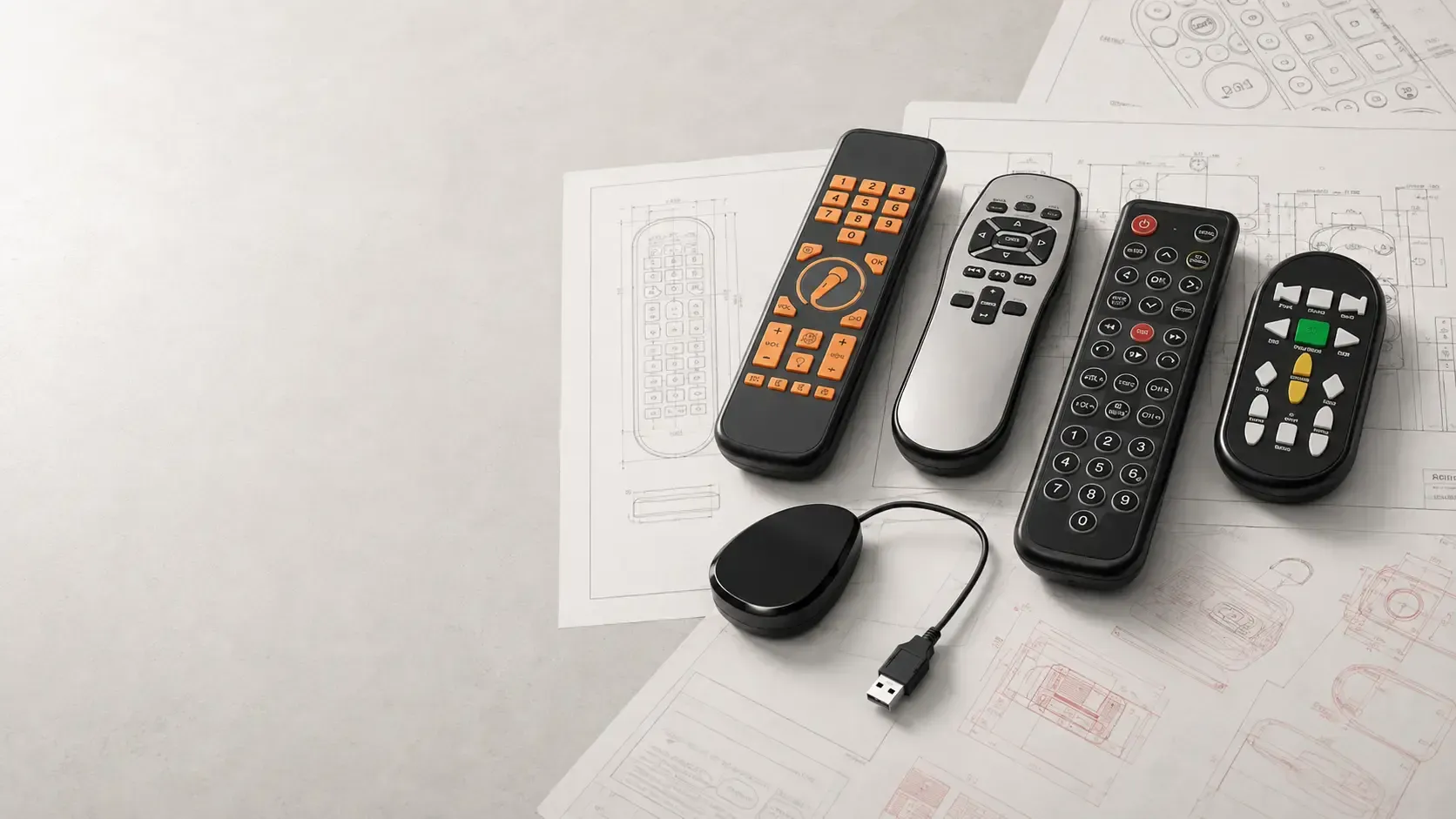
Many products in Celadon's OEM remote-control lineup already use familiar replaceable AAA or coin-cell batteries. Beginning with an established enclosure can reduce development time and give the product team a proven physical platform to evaluate. Celadon can help customers compare enclosure size, battery configuration, keypad construction, available features, and expected production volume before committing to a direction. The finished product still needs its own market and compliance review, but an appropriate standard platform can provide a practical starting point.


When a standard housing cannot deliver the required grip, seal, battery architecture, retention method, or visual identity, Celadon's custom tooling and enclosure development capabilities allow the battery-access solution to be engineered with the rest of the product. Celadon can support industrial, mechanical, and electronic design; 3D concept renderings; rapid prototypes; mold design; PCB development; microcontroller programming; first-article samples; compliance testing coordination; and mass production. That integrated process helps prevent the battery door from becoming an isolated component that conflicts with the electronics or user experience.


Celadon's role is also valuable during validation. Prototype reviews can examine whether the battery compartment is understandable, whether the user can complete the change without damaging the product, whether contacts hold the cells securely, and whether the enclosure returns to its intended fit after service. If the remote will be used in hospitality, healthcare, industrial, or high-cleaning environments, the team can consider those operating conditions while the design can still be refined.


Important: EU requirements depend on the final product, economic operator, battery, intended use, and market. This article is general product-development information and is not legal or regulatory advice.


Build Battery Serviceability Into the Product


If your company is developing a new remote control, receiver, or related handheld electronic product for the European market, now is the right time to review battery access. Contact Celadon to discuss your product requirements, expected quantities, battery configuration, enclosure options, and development schedule. Celadon's team can help you determine whether an existing OEM platform can be adapted or whether a custom enclosure, PCB, and tooling program will provide the stronger long-term solution.

Mike Griswold • August 17, 2026

By Mike Griswold August 17, 2026
Why Accessibility Begins with the Remote Control 
By Mike Griswold July 17, 2026
A practical guide to forecasting, component strategy, inventory planning, and stronger supplier collaboration.
Infographic on supply chain domino effect showing six linked stages from raw materials to delivery and customers.
By Mike Griswold June 18, 2026
Regional supply chain management is becoming more important in the remote-control manufacturing industry. Celadon shows why we can be relied upon proactively.
The original C.O.R.E. remote is left of 2 similar PIC series remotes.
By Mike Griswold May 28, 2026
Learn about how Celadon got started through the founder working as a customer service agent for CL 9, helping with the C.O.R.E. remote to manufacturing remotes
By Mike Griswold April 30, 2026
Manufacturing Trends - Redevelopement and Relocating Outside of China
By Mike Griswold February 20, 2026
A Case Study- The TELUS Senior Remote Project
Diagram illustrating NEC protocol timing, showing start pulse, address, data, and their inverted versions, along with timing in milliseconds.
By Mike Griswold January 16, 2026
Infra-red (IR) remote controls are relevant in today's technology scheme. There are many affordable solutions available when looking for remote control solutions.
Blue circuit board with a gold antenna, various chips, and connectors.
By Mike Griswold December 10, 2025
Bluetooth® Declaration Fees: What They Are and Why They Matter
By Mike Griswold October 30, 2025
If you’ve ever wished your handheld device could top-off in minutes instead of hours, supercapacitors (also called EDLCs) deserve a look. While they aren’t drop-in replacements for every lithium battery, pairing supercapacitors with USB-C Power Delivery (USB-PD) opens up fast, repeatable charging for custom remotes, receivers, industrial handhelds, and other embedded products—without sacrificing longevity or safety.
Diagram showing placement and artwork specifications for a label on a device, including dimensions and color.
By Mike Griswold September 26, 2025
Take a look into the product labeling requirements that go into the design work for RF remote controls. This is a comprehensive guide engineers need to know about.
Show More