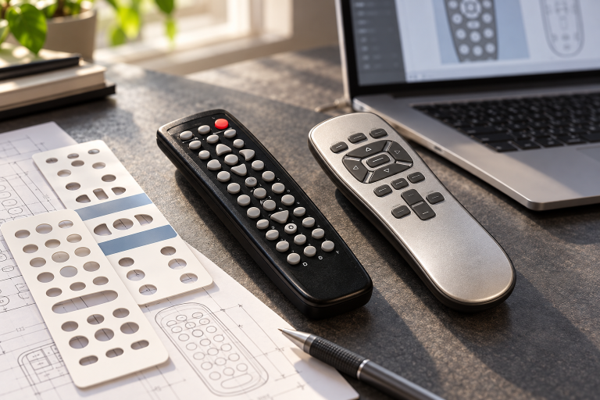
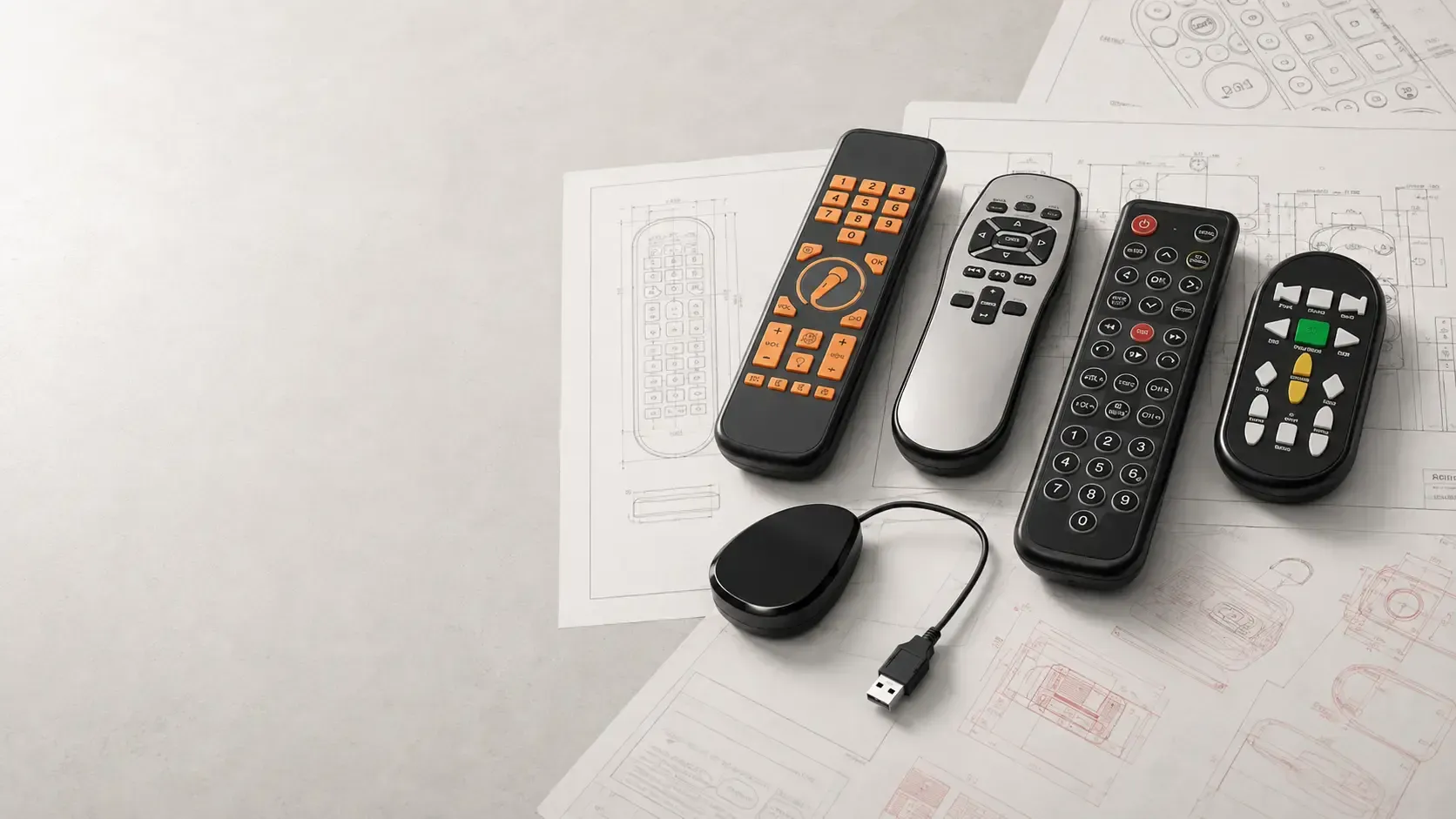
Celadon origin story connecting the CL 9 C.O.R.E. programmable remote control to Celadon’s modern OEM and custom control solutions.
The Innovative Remote That Was Ahead of Its Time
Modern remote control technology didn’t appear overnight. Long before smart homes, app-controlled devices, and integrated automation systems became common, a small but ambitious product called the C.O.R.E. (Controller Of Remote Equipment) was pushing the boundaries of what remote-control technology could do. Due to its sophistication, CL 9 wanted to ensure a customer service support team was in place to assist customers in programming and using the device. Before he would go on to form Celadon as it is today, Robert Retzlaff was hired by CL 9 for that customer support position. Handed a C.O.R.E. and the manual, he spent time reviewing, learning, and testing the new remote.

Thus, what began as a support role for an advanced programmable infrared controller would eventually become the foundation for what is now Celadon—a company built on adaptability, engineering innovation, and real-world control solutions.
This is the story of how early experimentation, persistence, and evolving technology helped shape the origins of Celadon and influenced decades of remote-control development.
A Promising Start—Followed by Challenges
In the early days of programmable electronics, the C.O.R.E. stood far ahead of its time. It wasn’t simply a remote control—it was a fully programmable infrared control system capable of learning IR signals, executing complex macros, running timed events, and even interfacing directly with a computer. The original rollout of the C.O.R.E. faced challenges that had little to do with its capabilities. Despite strong interest and broad distribution potential, production delays, limited inventory, and a sophistication beyond the average user meant that the product never reached its full market potential. By the time manufacturing scaled, it was too late. Operations were halted, and the company behind the product closed its doors.
For most products, that would have been the end of the story.
Keeping the Technology Alive
As a plan had been laid to seek a new buyer for the product, Robert was asked to stay on board as the customer support representative. Though operations for CL 9 had ceased, support for the product would continue, initially through a modest repair and support setup. During that period, it became increasingly clear that the technology behind the device still had value and many users depended on it for specialized applications.
One important use case came from the medical field, where organizations such as GE Medical utilized the system to control advanced imaging playback equipment. Demand for the technology remained, even after the original company had closed.
Rebuilding from the Ground Up
Once Robert was no longer receiving pay from the now defunct CL 9, he thought he’d give it a go and start his own business based on ideas around the C.O.R.E. remote. Through all this, Robert was also able to negotiate non-exclusive worldwide rights to produce the product, and access to the current inventory. This was the official birth of Celadon as a custom remote control systems manufacturing company!
GE Medical had been calling customer service and was really excited to purchase more remotes. And with CL 9 not in operation, Robert thought it a perfect time to see if he could figure out how to re-manufacture and improve upon the product.
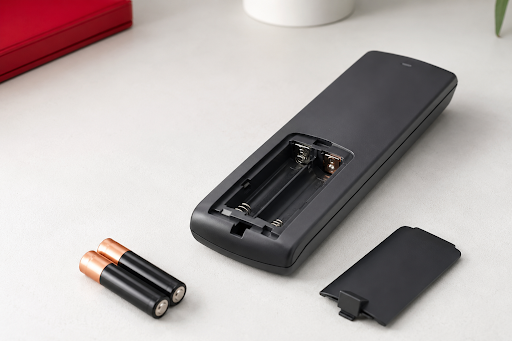
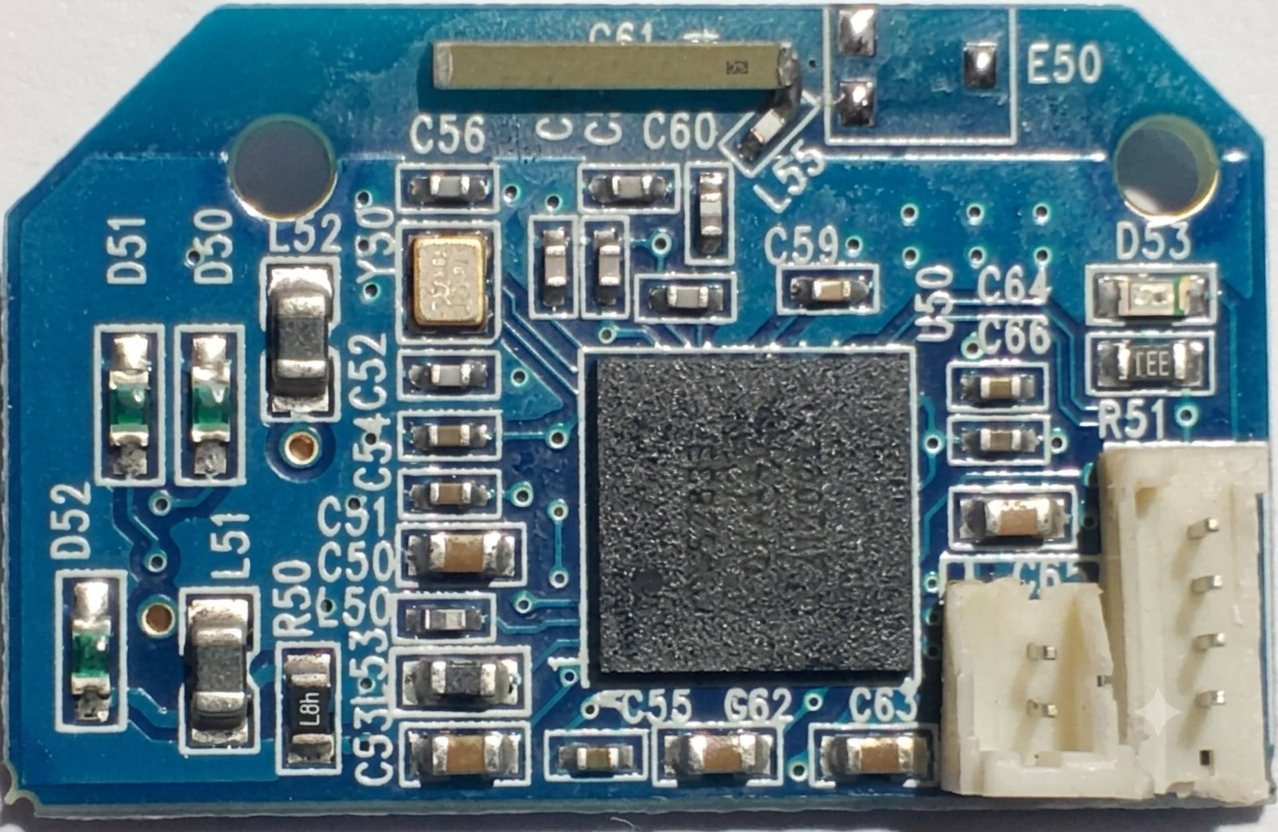
One of the biggest issues was that the internal lithium back-up battery was soldered to the PCB. This battery was only meant to be used during a battery change. The battery was designed to keep power to the volatile memory during the replacement of the AAA batteries. Contained in volatile RAM memory was not just all the stored infrared codes and programming, but also vital operating system code. If the C.O.R.E. was stored for long periods of time and the AAA batteries died, or if batteries were left out of the C.O.R.E. for too long during a battery change, the remote ceased being functional until the unit was reloaded with a valid operating system. So something needed to be done about the internal lithium battery in the circuit if the C.O.R.E. was ever to be successful. This meant:
- Locating original tooling and components
- Re-establishing manufacturing relationships
- Securing early purchase commitments
- Updating and stabilizing the technology
With a lot of time and work spent reimagining the C.O.R.E., Celadon evolved the product into the PIC (Programmable Infrared Controller) series, having to rename the device due to trademark concerns.

What began as an effort to preserve an innovative product quickly became something more—a reinvention.
Engineering Improvements That Mattered
Through hands-on repair work and direct customer feedback, several important engineering improvements emerged:
- Transitioning from volatile to non-volatile memory systems
- Enhancing battery reliability and system stability
- Expanding computer-control functionality through serial interfaces
- Enabling full system backup and restoration
These improvements made the platform increasingly viable for industrial, commercial, and professional applications.
Expanding Beyond the Original Vision
As the platform evolved, so did its applications.
The technology found further use in:
- Medical imaging control systems
- Accessibility solutions, including sip-and-puff interfaces
- Early voice-controlled environments
- PC-driven automation systems
One particularly meaningful area of development involved adaptive control solutions for users with severe physical limitations, demonstrating how flexible control technology could improve accessibility and independence.
The Transition to Celadon
Over time, the business expanded beyond a single product line as Celadon grew into a market leader in OEM, low volume and custom remote control and receiver systems, built to client specifications.
New partnerships, expanded receiver technologies, and broader OEM capabilities laid the groundwork for what would eventually become modern-day Celadon, expanding from advanced programmable remotes into broader OEM control and interface solutions.
While the original PIC product line eventually reached its natural end due to component limitations, its legacy carried forward into every product that followed.
Industry Recognition and Lasting Influence
Decades later, the original C.O.R.E. system continues to attract attention from technology enthusiasts and industry historians for how far ahead of its time it truly was. It also goes to show that sophistication and technology need the right time and place to be able to attract the proper marketplace. And a willingness to evolve the technology into more mass market appeal can help grow an entirely new company around it.
Additional resources and historical references include:

These retrospectives highlight the product’s advanced functionality, unique design philosophy, and continued relevance in conversations about programmable control systems and early home automation technology.
Built on Experience, Not Theory
Today, Celadon’s approach is still shaped by that origin story:
- Products designed for real-world reliability
- Engineering driven by practical use—not assumptions
- Solutions adaptable across industries, from consumer electronics to specialized applications
What started as a single product didn’t simply survive—it evolved into a foundation for long-term innovation.
Looking Forward
Technology continues to evolve, but the core challenge remains the same: creating control systems that are intuitive, reliable, and adaptable.
That’s a challenge Celadon has been helping solve from the very beginning.
Let’s Build What’s Next—Together
At Celadon, every product we develop is rooted in real-world experience and long-term reliability.
If you're exploring:
- Custom remote control solutions
- Integration with existing systems
- Scalable OEM manufacturing
We’d be happy to connect.
Start the conversation today and see how we can help bring your vision to life.